Agriculture

Advancing Climate-Smart Rice Production through Cross-Country Learning

Advancing Climate-Smart Rice Production through Cross-Country Learning 2329 1275 Jamie

Advancing Climate-Smart Rice Production through Cross-Country Learning: Insights from Tanzania, Liberia and Kenya

From 26th to 28th May 2025, the African Climate Action Partnership (AfCAP), in collaboration with the Tanzania Agricultural Research Institute (TARI), hosted a country knowledge exchange visit on “Promoting Climate-Smart Rice Production in Tanzania, Liberia, and Kenya.” The event brought together rice experts and government representatives from the three countries to strengthen technical capacity, foster cross-country learning, and promote collaboration around climate-smart rice technologies and policy integration.

The first day laid the foundation for meaningful engagement, beginning with welcome remarks from Tanzanian officials and an introduction to TARI’s role in advancing rice research. AfCAP presented the objectives of the exchange and introduced the Rice Community of Practice (CoP), setting the tone for collaborative learning and regional knowledge sharing. Participants were also invited to share their expectations and network with peers from across the continent.

Morning sessions explored the broader context of rice cultivation under climate change, with experts discussing both the challenges and opportunities of adopting climate-smart practices. Country representatives from Tanzania, Kenya, and Liberia presented overviews of their national rice development strategies, offering comparative insights into efforts to enhance resilience and productivity. In the afternoon, an interactive group discussion focused on aligning national rice programmes, followed by a showcase of Tanzania’s innovations, highlighting new technologies and approaches for climate mitigation and adaptation.

Photo: Liberian & Kenyan Delegates during an interactive activity

The second day opened with reflections on insights gained from Day 1, providing a thoughtful transition into country-led knowledge sharing. Delegates from Kenya and Liberia presented their experiences with implementing climate-smart rice practices. Their presentations highlighted innovative field technologies, such as improved water management systems and low-emission farming methods, alongside policy frameworks that support these initiatives. These sessions provided participants with valuable perspectives on how national contexts shape the adoption of climate-smart solutions.

Photo: Liberian delegate providing feedback during the interactivity from Day 2

In the afternoon, an engaging interactive session allowed participants to discuss how lessons learned could be adapted to their own country programmes. Topics included emission reduction strategies, resilience building, and productivity enhancement, all while supporting farmer livelihoods. Key takeaways were captured by rapporteurs and shared in plenary, emphasizing the importance of continued cross-country collaboration. The day closed with an introduction to the upcoming field visits, which would allow participants to observe how research, policy, and practice intersect in Tanzania’s rice sector.

Photo: Delegates at the Murzah Wilmar Rice Millers

The final day of the exchange featured a field tour to key irrigation schemes and research facilities in Tanzania, offering participants a firsthand look at climate-smart innovations in action. The tour began at Murzah Wilmar Rice Millers in Morogoro, where delegates observed the full rice processing chain, from seed cleaning and milling to final packaging. This visit offered valuable insights into how private sector engagement and post-harvest technologies are improving efficiency, reducing losses, and strengthening the resilience of rice value chains.

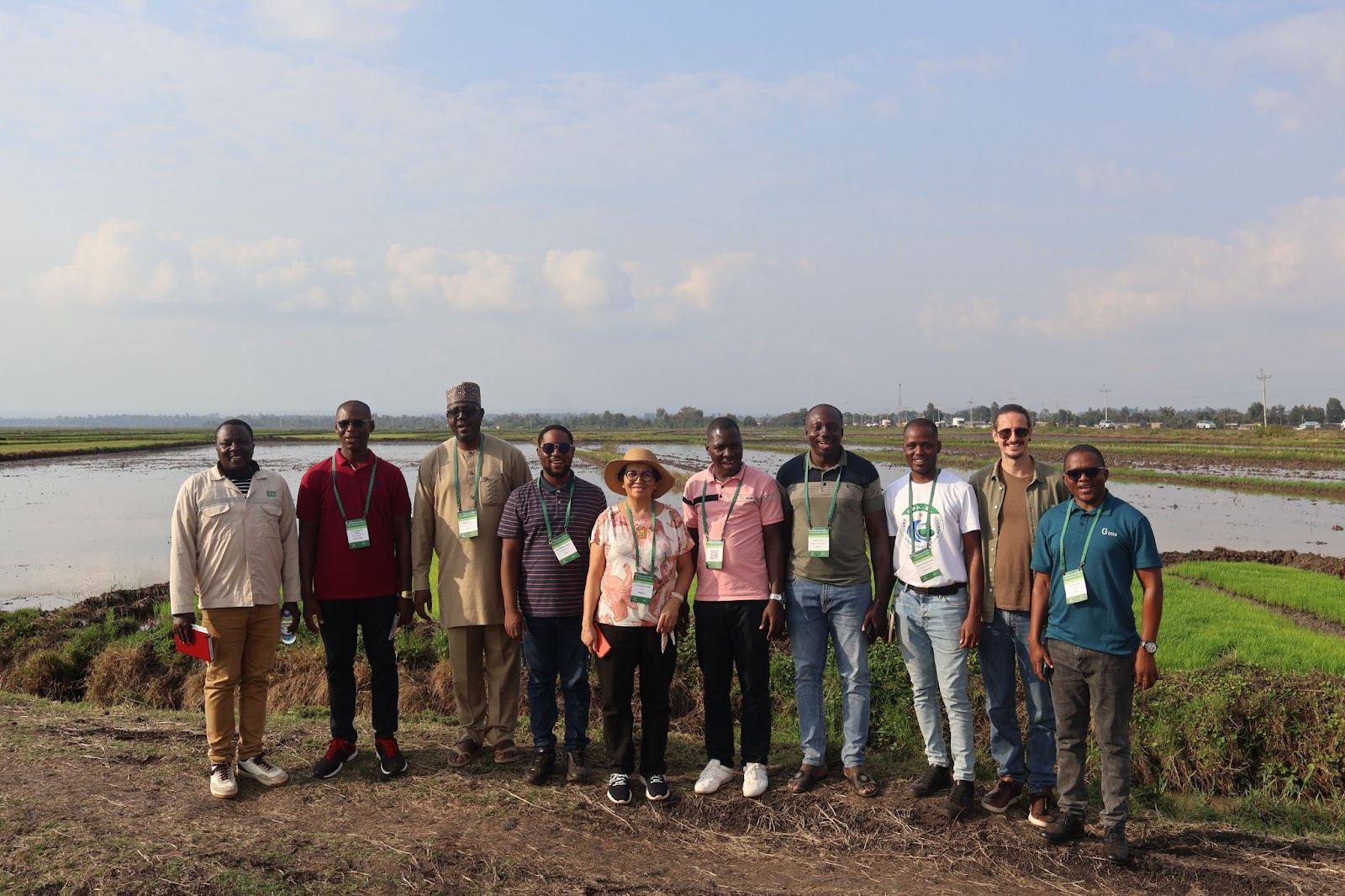
Photo: AfCAP Secretariat with delegates at local rice farmer’s paddy field

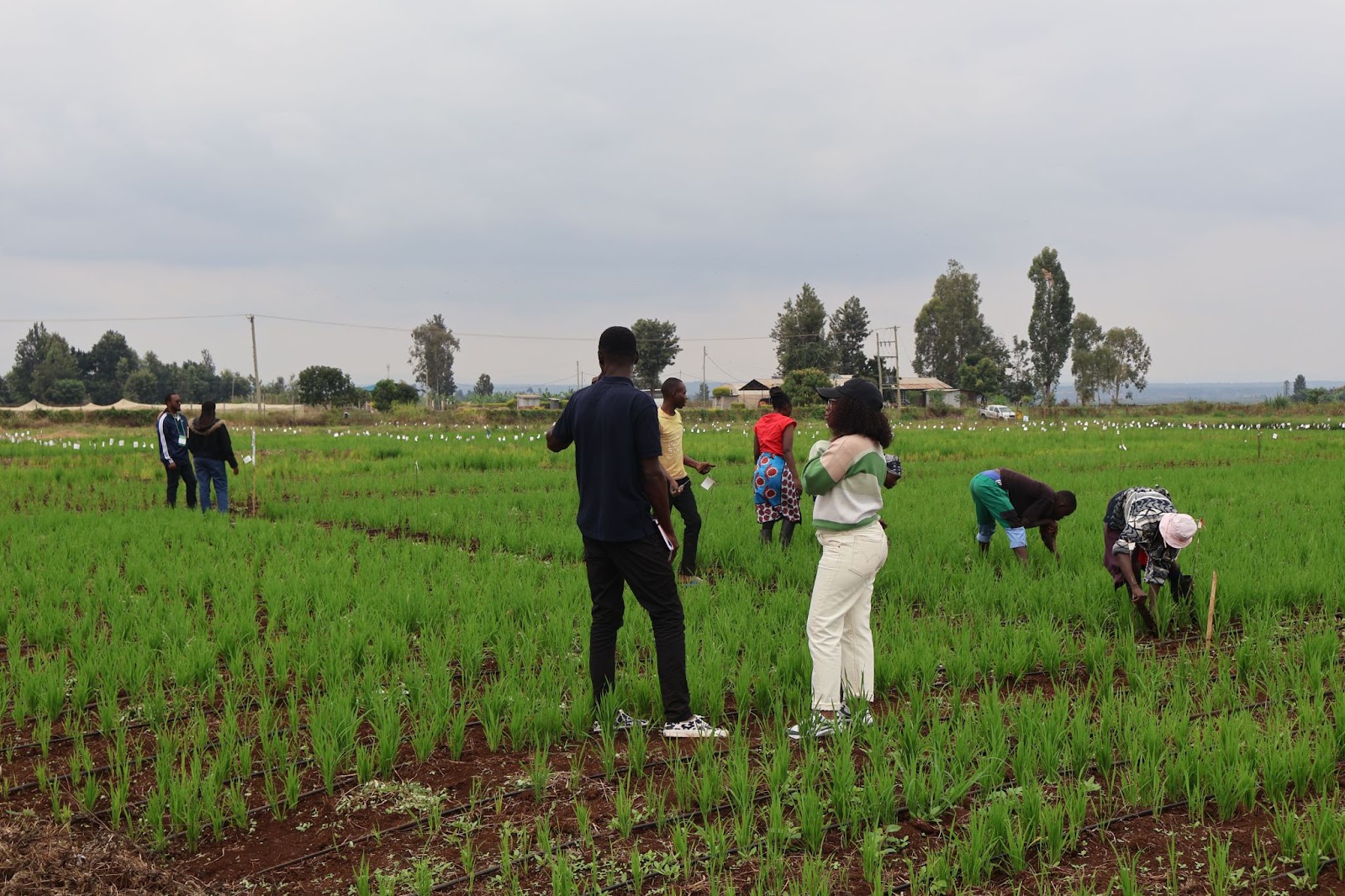
As part of the field visit, the group also met a local rice farmer working in the paddy fields, who shared practical insights into his cultivation practices. He demonstrated key techniques such as efficient water management, crop rotation, and the use of improved seed varieties, all aimed at boosting productivity while adapting to climate variability. This visit provided participants with a ground-level perspective on how climate-smart practices are being implemented at the farm level.

This hands-on experience complemented the technical sessions held throughout the exchange, underscoring the importance of bridging the gap between research and real-world application. Witnessing these practices in the field highlighted the need for continued collaboration among researchers, policymakers, and farmers to ensure that innovations are not only developed but also adopted in ways that are practical, scalable, and sustainable.

To read more about the outcomes and next steps from the event, download the meeting report below:

Rice Francophone Regional Workshop:

Rice Francophone Regional Workshop: 2560 1707 Jamie

Advancing Climate-Smart Rice Cultivation in Francophone Africa

Between the 11th – 13th of February 2025, the African Climate Action Partnership (AfCAP),  in collaboration with AfricaRice,  co-convened the Francophone Rice Regional Forum entitled “Promouvoir la Riziculture Intelligente face au Climat en Afrique”  in Bouake, Cote D’Ivoire.  The forum brought together government agencies, national agricultural research centres and key stakeholders from Cote D’Ivoire, DRC, Cameroon, Mali, Senegal, Madagascar and Guinea.

The multi-day regional forum brought together researchers, scientists, policymakers, and key public and private rice sector representatives to share knowledge and explore challenges and opportunities in adopting climate-smart rice practices, technologies, and tools to reduce Greenhouse Gas (GHG) emissions in Africa’s rice sector.

The forum opened with introductory sessions that set the scene for discussions by defining key themes and objectives. A key highlight was the exploration of synergies between food security, climate resilience and GHG mitigation, emphasizing integrated approaches. Participants engaged in interactive activities to establish priorities before moving onto country-specific experiences. Day 1 concluded with reflections on best practices and innovative solutions implemented across the region.

Photo: Delegates during a group activity

The second day shifted focus to the design of Nationally Determined Contributions (NDCs) and strategies to strengthen national program support. Day 2 concluded with discussions on reinforcing commitments and ensuring long-term implementation.

Photo: Delegates at the M’be research station at AfricaRice

The final day of the forum provided hands-on learning through field and laboratory visits at the M’be Research Station. Delegates explored innovative rice farming techniques, including biochar application, nitrogen-based fertilizers, rice-fish systems, and water and fertilizer management strategies. These visits offered practical insights into diversification and multiple rice harvest systems tailored for Africa. The event officially concluded following the field visit.

This forum served as a vital platform for fostering collaboration, aligning strategies and driving sustainable rice cultivation transformation in response to climate challenges.

Sustainable Rice Farming: Unlocking Nigeria’s Potential with System of Rice Intensification (SRI)

Sustainable Rice Farming: Unlocking Nigeria’s Potential with System of Rice Intensification (SRI) 2560 1092 Jamie

Sustainable Rice Farming: Unlocking Nigeria’s Potential with System of Rice Intensification (SRI)

Traditional rice-growing practices in Nigeria contribute to water scarcity and greenhouse gas emissions. Continuous flooding of rice fields leads to inefficient water use and exacerbates environmental problems, including methane emissions and climate change. There is an urgent need to switch from these conventional practices to more sustainable alternatives, such as the System of Rice Intensification (SRI).

Research shows that SRI offers significant advantages over conventional rice cultivation. It improves water-use efficiency by promoting intermittent irrigation and aerobic soil conditions, thereby reducing methane emissions and increasing rice yields. SRI practices contribute to environmental sustainability while improving farmers’ livelihoods and food security. The policy brief proposes concrete recommendations to facilitate the adoption and scaling-up of SRI practices in Nigeria, such as policy support, financial incentives, capacity building, research and development, as well as monitoring and evaluation mechanisms.

To read more on this Policy Brief download the brief below:

Regenerative Agrivoltaics in Africa for Improved Livelihoods & Climate Resilience

Regenerative Agrivoltaics in Africa for Improved Livelihoods & Climate Resilience 1600 720 Jamie

Regenerative Agrivoltaics in Africa for Improved Livelihoods, Climate Resilience, and Agricultural Decarbonization webinar

On the 10th of October 2024, the African Climate Action Partnership in partnership with the National Renewable Energy Laboratories (NREL) co-convened a webinar entitled “Regenerative Agrivoltaics in Africa for Improved Livelihoods, Climate Resilience, and Agricultural Decarbonization”. The webinar showcased case studies of agrivoltaics systems in  Africa, highlighted best practices and trade-offs, and explored potential applications and research areas in Africa to improve livelihoods, adapt to climate change, and support national Nationally Determined Contribution’s (NDCs) and local low-carbon sustainable development strategies.

The webinar began with a brief introduction to agrivoltaics and an overview of the benefits, challenges and insights on the different configurative agrivoltaics. During the session, numerous benefits from agrivoltaics usage in Africa were explained and how the various business models were used to improve rural communities water irrigation systems and cold storage for crop yields.

The webinar continued by providing a few case studies of the effectiveness of agrivoltaics on food, energy and water. The first case study focused on community-based solutions for food, energy and water resilience. It outlined how solar energy can provide basic energy usage whilst simultaneously providing great crop yields and better working environments for community members. The second case study gave an overview of the impacts of agrivoltaics on food production, energy generation and water conservation in East Africa. The implementation of a configurative agrivoltaics can support farmers by minmising the need for irrigation as it provides crops with shade which aids in the growth of crops. This indicates crops provided greater yields with less water and energy needed.

Furthermore, these case studies showcased how agrivoltaics can support livelihoods, maintain and uplift rural community’s economy. Moving onto the second last segment of the webinar shared the opportunities and co-benefits of decarbonizing agriculture with regenerative agrivoltaics. Points on greenhouse gas mitigation, water conservation, soil health improvement and biodiversity conservation are providing long impact improvement to climate change risks.

The final segment of the webinar focused on how to map biophysical features to depict where it is most suitable for crops to be yielded East Africa. A suitability analysis is a tool used to assess and analyse if a space is beneficial for agrivoltaics in East Africa. The tool illustrated best areas to produce agrivoltaics yielded crops as well as how agrivoltaics could assist with areas under the risk towards climate change factors. 

If you would like to view the webinar recording and read through PowerPoint presentation, please follow the links below:

Strengthening Nationally Determined Contribution (NDC) through robust Greenhouse Gas (GHG) Inventories

Strengthening Nationally Determined Contribution (NDC) through robust Greenhouse Gas (GHG) Inventories 2594 1405 Jamie

Strengthening Nationally Determined Contribution (NDC) revisions through robust Livestock Greenhouse Gas (GHG) Inventories

To strengthen climate ambitions and effectively contribute to the goals under the Paris Agreement, many African countries will be submitting their revised Nationally Determined Contributions (NDCs) by 2025. A critical area for improvement in NDC commitments, is to strengthen national greenhouse gas (GHG) inventories, particularly in agriculture, where accurate data is crucial for aligning climate goals with food security targets. Moving from tier 1 to tier 2 inventories would enhance reporting and monitoring systems, enabling countries to set robust climate targets.

However, African nations face challenges, including lack of reliable data on agricultural practices, land use and emission estimates, limited technical expertise, limited resources, and weak institutional frameworks which hinder accurate agricultural inventories and limit the ability to set robust targets. Addressing these gaps could enhance reporting, improve monitoring, provide insights on emissions from farming practices, and guide targeted mitigation.

To discuss these issues, the United Nations Framework Convention on Climate Change (UNFCCC) Regional Collaboration Centre (RCC) for East and Southern Africa and the Africa Climate Action Partnership (AfCAP) hosted a webinar entitled “Strengthening NDC revisions through robust livestock GHG inventories” on the 18th of September 2024.

This webinar provided an overview of the process and the necessary steps for developing tier 2 inventories and how to translate these into NDC targets. Experts from Kenya and Zimbabwe shared their experiences of challenges and limitations in developing inventories and highlighting opportunities to mobilise resources to strengthen GHG inventories. During the session participants had the opportunity to explore more robust and concrete NDC targets.

To view the recording of the webinar and presentations please use the links down below:

Malawi Livestock Sector Steps Up Climate Accountability with GHG Training

Malawi Livestock Sector Steps Up Climate Accountability with GHG Training 1359 843 Jamie

Malawi Livestock Sector Steps Up Climate Accountability with GHG Training

Malawi’s carbon footprint is relatively small compared to its neighbors, but as its population grows, accurate GHG inventories for livestock are essential for informing the country’s nationally determined contributions (NDCs) and long-term strategies (LTS). With about 80% of rural livelihoods dependent on agriculture, identifying climate-resilient, low-emission livestock practices is crucial for sustainable economic development in Malawi.

From November 20-21, 2023, AfCAP hosted the Strengthening National Response to Climate Smart Livestock Workshop in Salima, Malawi. The workshop aimed to raise awareness and enhance understanding of GHG emissions in the livestock sector. Key issues identified included the need for broader stakeholder engagement and information on priority data gaps for Tier 2 assessments. In response, the Malawi Department of Animal Health and Livestock Development (DAHLD) and Lilongwe University of Agriculture and Natural Resources (LUNAR) partnered with the Global Climate Action Partnership’s (GCAP) Climate Action Accelerator (CAA) to organize a 2-day virtual capacity-building workshop with stakeholders and local experts.

The workshop consisted of two virtual sessions held on September 3-4, 2024. The first session addressed livestock and climate change policies in relation to Malawi’s Tier 2 GHG inventory, featuring presentations from two government officials. This was followed by insights into Malawi’s Tier 1 and 2 GHG inventories, culminating in a discussion on data collection challenges and needs for the Tier 2 inventory.

The second session focused on improving inventory data and climate financing. It included a presentation on priority data collection needs for the Tier 2 inventory, as well as experiences from Kenya and Zimbabwe on leveraging climate finance for livestock MRV systems. The session concluded with a discussion where stakeholders proposed next steps for advancing Malawi’s livestock Tier 2 GHG inventory in future reporting cycles.

To read more about the outcomes and the next steps following this training download the report below:

Building Better Livestock Emission Inventories Through Senegal-Mali Collaboration

Building Better Livestock Emission Inventories Through Senegal-Mali Collaboration 1506 793 Jamie

Building Better Livestock Emission Inventories Through Senegal-Mali Collaboration

From the 2nd – 3rd September 2024, the African Climate Action Partnership hosted a technical exchange workshop entitled “Strengthening Livestock GHG Inventory using an enhanced approach” between Senegal and Mali in Saly, Senegal. The workshop aimed to increase awareness and knowledge around livestock Greenhouse Gas (GHG) inventory development and was attended by stakeholders from both countries’ climate and livestock ministries.

The workshop objectives were to: 1) Present the Tier 2 livestock GHG inventory process; 2) Strengthen the capacities of stakeholders on the Tier 2 livestock GHG inventory approach and; 3) Propose a roadmap for the effective implementation of national Tier 2 GHG inventory.

Following the event, important next steps were discussed. These included: the need to secure funding; enhancing collaboration among stakeholders; establishing a sustainable research program; building capacity of stakeholders and; adapting tools.

To read more about the outcomes and next steps of the event download the meeting report below:

Promotion of Climate Smart Rice in Africa

Promotion of Climate Smart Rice in Africa 2560 1284 Jamie

Promoting Climate Smart Rice Cultivation in Africa

From July 29-31, 2024, the African Climate Action Partnership held a workshop titled “Promoting Climate Smart Rice Cultivation in Africa” gathering rice experts from the Anglophone regions of Africa. 

The workshop focused on sharing knowledge about integrating climate-resilient and yield-enhancing rice technologies into policies aimed at reducing GHG emissions. Discussions included exploring the challenges and opportunities in the implementation of climate-smart rice practices, technologies and tools that reduce methane emissions, while increasing resilience to climate change, grain yield and farmers’ income and; identifying mechanisms through which climate-smart practices, technologies and tools can be incorporated into supportive policies and policy development. 

On the third day of the workshop, AfCAP organised a field trip for delegates to explore climate-smart rice cultivation. The morning included visits to the Kenya Agricultural and Livestock Research Organisation (KALRO)  to observe the Seed and Seed Packaging Unit and International Rice Research Institute’s Direct Seeded Rice (DSR) Farming Field. In the afternoon, delegates toured Nice Rice Mills and the Mwea Rice Growers Multipurpose Cooperative Society Ltd., where they saw the rice processing from seed to packaging, concluding with a visit to a local farmer from the cooperative.

To read more about the outcomes and next steps of the event download the meeting report below:

Back to top